


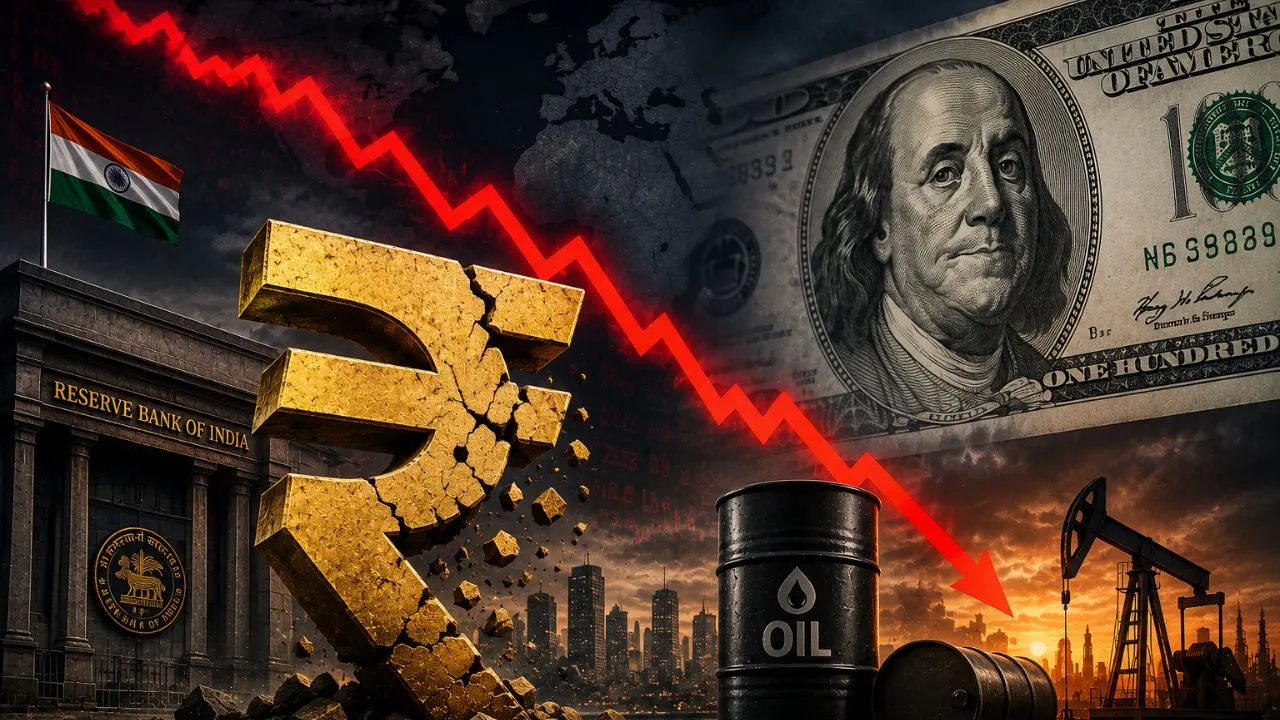
Since the beginning of 2026 the Indian Rupee has fallen substantially against the dollar. This has caused concern throughout the country as, after reaching an all-time low in the space of no time, the currency has fallen dramatically.
Today the Rupee The currency hit its all-time low on March 2026, reaching a value of approximately ₹94.82 to the dollar. By way of comparison, the Rupee’s value in 1947-48 was 3.32, the currency has fallen by 5% in the first few months of 2026, which is the worst recent performing currency among the developing world.
Compared to previous decades, the depreciation looks dramatic:
| Year | Dollar vs Rupee |
|---|---|
| 1947 | ₹3.32 |
| 1966 | ₹7.50 |
| 1991 | ₹17 |
| 2026 | ₹94+ |
The fall is not due to a single event. Instead, it reflects deeper economic forces shaping the global financial system.
Why the Rupee Is weakening?
Several internal and global factors are pushing the Rupee down:
1. Inflation Differential (Most Important Reason)
Over long periods, the rupee’s depreciation against the dollar mainly reflects higher inflation at home, persistent current account deficits, and India’s dependence on imported energy. When domestic prices rise faster than in the US, the exchange rate tends to adjust so that Indian exports remain competitive.
Even as India buys nearly all its crude oil abroad, higher oil rates mean more dollars are needed to cover those purchases. When world markets turn nervous now and then, overseas funds often exit developing economies, hitting local money values rupee included.
Economic Principle:
As prices surge, a pattern shows up: national currency tends to slip when expenses rise sharply. When expenses stretch further each year, money buys less beyond borders. If:
India inflation = 6%
U.S. inflation = 2%
When Indian products cost more abroad, the rupee tends to lose value so they stay competitive. A person’s money buys roughly the same amount of goods across countries when adjusted fairly.
2. Persistent Current Account Deficit (CAD)
Most of what India uses comes from abroad rather than going out to others. Crude Oil, Gold, Electronics, Capital Goods, Fuelled by imports, dollars keep moving. Payments in greenbacks mean steady pressure on supply.
More demand for USD ⇒ rupee weakens.
3. Oil Prices & Middle East Conflict Impact
Fuel needs pull in most of its oil from abroad. Nearly four out of every five barrels of oil come from overseas sources. Rising oil costs forces energy firms to purchase more US currency, so demand for greenbacks increases. That surge weighs on India’s rupee. Shocks at the pump
hit the INR fast – no delay. Rupee value slips each time crude jumps.
4. Interest Rate Differentials & Dollar Strength
Fed hikes? Money shifts toward American bonds. Safety pulls capital Stateside, pushing greenback higher worldwide while foreign coins sag under pressure. That rhythm – dollar up, others down – keeps repeating across borders.
5. Productivity & Development Gap
Developing economies naturally experience: Higher growth, Higher inflation, Currency depreciation over time.
Big gains in growth sometimes come with stronger local buying power, even as currency values drop on global markets. Which Known as the Balassa Samuelson Effect.
6. RBI’s Managed Depreciation Policy
Floating freely, the rupee’s value isn’t pinned down by RBI policy. Instead, market forces shape its path without rigid targets set in stone.
Step by step, the system leans on a managed float approach. Through small adjustments, the RBI guides the currency lower over time. This path helps exports stay strong without sharp swings that drain reserves. Movements you see are usually planned moves, far from random slips.
7. Strong US Dollar and Federal Reserve Policies
Another major reason behind the rupee’s fall is the strength of the US Dollar itself. The US Federal Reserve has maintained higher interest rates to control inflation in America. When US interest rates remain high:
- Global investors move money into US bonds
- Demand for dollars increases
- Emerging market currencies weaken
This phenomenon is often called the “Strong Dollar Trap.”
Countries like India face pressure because capital starts flowing toward safer US assets instead of emerging markets.
As a result:
- Dollar becomes stronger globally
- Rupee loses value against USD
8. Foreign Investors Are Pulling Money Out of India
Foreign Institutional Investors (FIIs) and Foreign Portfolio Investors (FPIs) are a significant component of Indian Financial markets.
When risks and uncertainty of a global scale increase, investors often withdraw money from emerging economies like India and move funds into safer assets such as:
- US Dollar
- US Treasury Bonds
- Gold
In March 2026 alone, they withdrew over ₹1.04 lakh crore ($11 billion), creating a massive shortage of dollars.
How RBI Is Trying to Protect the Rupee
The Reserve Bank of India (RBI) follows a managed float system. This means the rupee is market-driven, but the RBI intervenes when volatility becomes excessive.
To stabilize the rupee, RBI may:
- Sell dollar reserves
- Raise interest rates
- Tighten liquidity
- Encourage foreign inflows
India’s forex reserves remain one of the country’s biggest defenses against extreme currency volatility.
However, defending the rupee aggressively for a long period can also reduce reserves and slow economic growth.
Is a Weak Rupee Always Bad?
A weaker rupee impact on the economy is a mix of challenges and opportunities for a country like India and other developing countries.
A weaker rupee acts as a boost for certain sectors of the economy –
1. Indian exports become cheaper globally: Indian products become cheaper for international buyers, which can lead to higher sales abroad.
2. Tourism may improve: The cost of travelling to India for foreign travellers will reduce, which can lead to an increase in international tourism.
3. Foreign investments rise: For foreign investors, the cost of investing in Indian assets or setting up businesses can become more attractive.
4. Leading Beneficiaries: Major firms like TCS, Infosys, and Wipro often see financial benefits during these periods.
However, the negative side includes:
- Fuel prices increase
- Inflation rises
- Expensive foreign education and travel
- Increased business costs
Can the Rupee Reach ₹100 Per Dollar?
In today’s scenario, the big question is whether the rupee can reach ₹100 per dollar. Some analysts believe the rupee could move toward ₹96–₹98 soon if:
- Oil prices continue rising
- Middle East tensions worsen US
- Interest rates remain high
- Foreign capital outflows continue
However, much will depend on:
- RBI policy actions
- Global oil prices
- Federal Reserve decisions
- Geopolitical stability
Final Thoughts
One reason the rupee has weakened ties to rising U.S. interest rates, along with costly crude oil. Jitters in global markets add pressure too, although India’s economic outlook still holds firm. The path toward 100 rupees per dollar hinges on how soon tensions ease and if energy costs drop. It also rests on whether the central bank acts firmly or hesitates.
Moves by officials matter just as much as outside forces. Slower declines, kept under control, cause fewer shocks when prices stay flat and policy improvements continue. Sharp drops without guidance bring bigger trouble.
Research Contribution: This article was developed with research assistance and reference support from Mr. Sukhpreet Singh.













Nice article